
Over the past few years, there has been an explosive proliferation in the number of FEI jumping shows in the United States, referred to as CSIs, the shortened form of Concours de Saut International.
In 2025 alone, the U.S. is scheduled to host 109 CSI shows, with 84 of those holding competition at CSI3* level and above. There are no fewer than 20 CSI5* “elite” jumping shows on the calendar. That’s too many. When everything is special, nothing is special. Not only does the quality of competition suffer when top riders are spread too thin, but national competitions also get elbowed out.
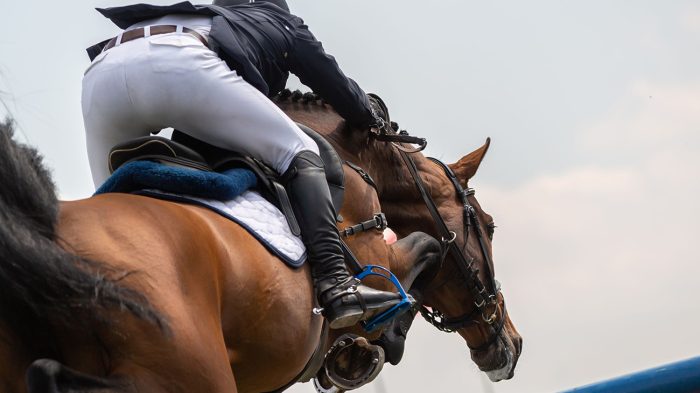
These glittery, prestigious CSI5* shows were not very common even a decade ago. In 2010, just one CSI5* was held in the U.S., at the Winter Equestrian Festival (Florida). By 2015, there were eight CSI5* events in the U.S., four of which were held during WEF.
The FEI designed the specifications for competitions at the five-star level to represent the highest level of difficulty and prestige in the sport, coupled with huge prize money. In my view, a CSI5* competition requires more than just standards for jump height and width, venue and fees. To justify the elite status of these events, there must be enough top-ranked riders in attendance to ensure the highest level of competition and spectator interest. It’s not only about the jumps and facilities—it’s about who and how many top riders compete. The quality of the field really matters and can be strongly influenced by effective calendar management. Simply designating a competition as a CSI5* does not automatically transform it into a world-class event worthy of global recognition.
The increase in the number of CSI shows in the U.S. has diluted the pool of competitors and lowered the level of competitive challenge for many. The U.S. calendar needs fewer four- and five-star shows to ensure big class numbers and thrilling action from a field of highly ranked riders. This requires strategically limiting the number of events to ensure the requisite number of top-ranked athletes attend. The U.S. Equestrian Federation should not approve CSI4* and CSI5* competitions based solely on management, venue and prize money. It’s not just about jumping a CSI5* course clear that matters—it’s about jumping clear and going head-to-head against other top riders.
A Parallel Circuit
Perhaps even more damaging than diluting the level of competition is the rapid rise in the number of CSIs, which has ostensibly created a parallel circuit that crowds out and directly harms USEF national competitions. The CSI4* and CSI5* shows are so numerous that jumper riders can almost exclusively compete at these events without ever going to the traditionally popular national-rated shows, some of which are struggling as a result. Imagine a weekend where your local rated show draws crickets—empty stalls and silent rings—because a glittering CSI nearby is enticing riders away and stealing the spotlight.
Top riders aim to compete in CSI classes to earn ranking points, which, in turn, grant them entry into bigger CSI events. Because CSIs in the U.S. carry a full slate of national classes, professionals bring their whole barn along for the ride to jump in the lower-level classes. CSI riders in the U.S. make money by training non-CSI-capable clients at the show.
It generally doesn’t work like that in Europe, where CSI events typically have qualification requirements and minimum jump heights. Therefore, top riders in Europe generally can’t take novice-level riders to these shows and make money, because there are no classes for the clients to jump in.
The Mileage Rule Debate
USEF has allowed FEI shows to be organized outside the mileage rule (designed to avoid overlapping shows happening at the same time within a set radius of each other), provided certain other USEF requirements are met, and fees are paid. As a result, national shows often find themselves head-to-head with a nearby CSI, competing for their bread-and-butter customer base—namely, developing hunter-jumper riders—because the trainer can take them to the CSI instead.
One example is the long-standing Lake Placid Horse Show in New York, a USEF-designated “Heritage Show” which was threatened with extinction by the addition of nearby FEI competitions in the same calendar period. Lake Placid leadership argued—correctly—that such scheduling would make their long-standing Heritage Show unsustainable.
After pointed discussions with USEF and the intervention of supporters, the conflicting FEI dates were not re-approved. The result was immediate and powerful: Lake Placid sold out completely well before its closing date, reversing the severe decline it suffered when it was forced to compete against a nearby FEI event.
Between Sept.17 and Oct. 12 this year, four CSI competitions ran against six USEF events in New York and New Jersey, all within 125 miles of my farm. Even with the cancellation of the two Princeton Show Jumping events due to storm damage, the USEF competitions had to compete against the CSIs for entries in national classes.
For example, a HITS competitions in October had approximately five entries per class, while at the same time, October’s Silo Ridge CSI had approximately 33 per class. The distance between these two shows is about 40 miles driving and 26 miles as the crow flies. Offering lower-level classes at Silo Ridge siphoned off entries from HITS. National shows struggle to compete successfully against a CSI show that holds lower-level classes.
Having CSI competitions running against USEF competitions is neither effective nor efficient management of the equestrian sport calendar. It’s unfair for these two types of shows to live in conflict with each other, as each should serve different segments of the equestrian customer base. The mileage rule exists for a reason: to manage the calendar. Ignoring it for FEI shows undermines its very purpose.
While staging four- and five-star events in the U.S. has obvious benefits for the development of our sport, having too many of them cheapens the brand, dilutes the competitiveness and crowds out USEF competitions that serve the needs of the vast majority of participants in the sport. FEI shows shouldn’t be so common that they replace national competitions, which should remain the bedrock of competition outings for most riders.
Perhaps it is time for the FEI to consider limiting the number of elite CSI5* competitions (and perhaps CSI4*s, too) that it authorizes in a region. After all, scarcity boosts value. This would increase the prestige and meaning of “the highest level of competition.” Elevating the standard of competition at these events would also set the stage to attract more sponsorship for these truly top-level competitions and to build a larger audience for them in person, online and on TV.
Let’s figure out a way to make the U.S. show calendar work for our top athletes, our national shows and our entire equestrian community. Adding ever more CSI5* shows to the U.S. competition landscape is not the way to do it.